Category: News

  • Occupier’s liability

    Occupier’s liability

    As a landowner it’s important to understand, and take into consideration, occupier’s liability. As an occupier of a home or land, you have a duty of care towards those who visit your property. Indeed, as a visitor, you may deserve compensation for injuries caused on someone else’s land that were not your fault.

    At Wrigley Claydon, we were proud to recently win a case of occupier liability. Our client was badly injured on a broken sign positioned on the defendant’s land. Due to the positioning of the sign, the client sustained both head and facial injuries, which as well as causing them great pain also had potential to scar. We were passionate about this case, and ensured that justice was served. Our client received £1,000 and luckily the injury healed healthily within three weeks, leaving no scar.

    We understand that care for those with injuries can be expensive, as well an emotional struggle for the victim and their family. While, of course, accidents happen, it is important to evaluate errors made and be aware of paying out for things which could have been avoided with due care and attention. By law, property owners have a duty of care towards those who visit their land, and accidents caused by the defective or dangerous condition of the premises should not be left to the victim to finance.

    If you believe you are entitled to claim compensation, the first step is to hire an experienced lawyer. They will talk you through the best course of action and advise you on various ways of funding your claim. At Wrigley Claydon, we have over 30 years experience of helping clients receive the compensation they deserve following accidents where they have suffered personal injury or financial loss.

    To speak to a personal injury solicitor about a possible claim call us today on 0161 785 3534 or contact us via our website.

  • Does charity begin at home? Making a Will

    Does charity begin at home? Making a Will

    September saw “Remember a Charity in your Will” week. Charities joined forces with the government to highlight the importance of gifts left to charity in Wills.

    Apparently, 74% of people regularly support a charity in their lifetime but only 6% of people in the UK have left a gift to charity in their Will.However, during a six month project conducted by the Cabinet Office Behavioural Insights Team, this percentage rose to 10% when Solicitors told their clients that leaving a gift to charity was an option.

    When clients were asked if there were any charities that they were passionate about, giving rose again to 15%. During the trial an additional £1m of gifts was left to charities in Wills.

    Leaving a gift to your favourite charity on your death is one of the many reasons for making a Will. Making a Will ensures that any specific intentions you have for the disposal of your property, money and possessions, after your death, can be carried out.It also gives you the opportunity to provide for your children, a relative or friend or to minimise potential tax liabilities. Above all, it prevents added stress and worry to your family at a time of bereavement.

    If you would like to talk to us about making a Will please call us on 0161 624 6811 and ask to speak to a member of our Wills and Probate Team.
  • Jeans for Genes is a Great Success

    Jeans for Genes is a Great Success

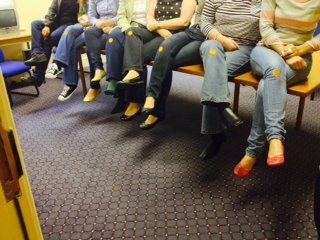
    Staff at our Oldham office left their suits at home last Friday and instead wore jeans as they took part in Jeans for Genes Day 2013.

    We each donated £2 in return for wearing jeans on the day.

    Jeans for Genes Day raises money for Genetic Disorders UK, the charity that aims to transform the lives of children with genetic disorders.

    Genetic disorders affect 1 in 25 children in the UK; that’s more than 30,000 babies born each year, the associated health problems being that genetic disorders are the biggest cause of death of children aged 14 and under.

    Jeans for Genes Day invites everyone across the UK from nurseries and schools to companies to wear their jeans for the day in return for a donation. The funds raised provide vital care and support for thousands of children with genetic disorders.

    Further information can be found at www.jeansforgenesday.org .

  • Flood risks to impact heavily on potential home owners

    Statistics show that 1 in 6 properties in England and Wales are at risk of flooding from rivers and the sea causing chaos and wide spread destruction. In addition to the emotional and physical damage caused by flooding, if a property is at risk then it may also impact on a person’s ability to be granted a mortgage, obtain suitable buildings insurance cover or even sell the home in the future.

    If you are thinking of buying a property then the main ways of learning more about the risk of flooding are through conducting searches. Instructing a conveyancing solicitor, checking the Environmental Agency website, making enquiries of the seller or instructing a Surveyor to carry out a physical inspection of the property in question will help identify any potential flood risk. Unfortunately, it may not be sufficient to rely on just one type of investigation alone.

    It is imperative that potential flood risk is considered particularly where mortgage finance is required, as lenders are increasingly likely to investigate flood risk and in turn, impose additional conditions on their mortgage product. One of these conditions will most certainly be that flood risk is a specified cover in any buildings insurance policy.

    Indeed, when a property is seen to be at risk of flooding, insurance companies may refuse to insure altogether or impose much higher premiums (especially if a property has previously made a flood claim) and/or excesses.

    Potential purchasers of ‘flood risk properties’ should therefore investigate the buildings insurance position from the outset of the conveyancing transaction (and certainly before entering into any contractual commitments) so that they are aware of the likely excessive cost that could be involved.

    If you have any questions or would like to talk with a conveyancing solicitor  please call Gary Burns on 0161 624 6811, gb@wrigleyclaydon.com at the Oldham office or Emma Piszkalo on 01706 815712, ep@wrigleyclaydontod.com at the Todmorden office.
  • Jeans for Genes Day 2013

    Jeans for Genes Day 2013

    Staff at our Oldham office will be leaving their suits at home and wearing their jeans on Jeans for Genes Day 2013 which takes place on Friday 20th September 2013.

    We will each be making a donation of £2 in return for wearing jeans on the day.

    Jeans for Genes Day raises money for Genetic Disorders UK, the charity that aims to transform the lives of children with genetic disorders. Genetic disorders affect 1 in 25 children in the UK; that’s more than 30,000 babies born each year, the associated health problems being that genetic disorders are the biggest cause of death of children aged 14 and under. Jeans for Genes Day invites everyone across the UK from nurseries and schools to companies to wear their jeans for the day in return for a donation. The funds raised provide vital care and support for thousands of children with genetic disorders.

    Further information can be found at www.jeansforgenesday.org.

  • Injury Claims with Solicitors not Salesmen

    Injury Claims with Solicitors not Salesmen

    Solicitors have spent years training in preparation to give help and advice to their clients at what is often a critical and potentially stressful time in their life. At such times one does not merely need a professional service on injury claims, but kindness and compassion too.
    A solicitor is someone one can depend on, someone that’s there for you throughout.

    Traditionally, clients wishing to make a Personal Injury Compensation Claim would spend time asking friends and relatives to recommend a “good solicitor” to approach and confide in. In turn, as recognised authorities working in the community, solicitors comfortably relied on their hard earned reputations and had no need to spend time on advertising their skills.

    However, in the late 1990’s, when “No Win No Fee” injury claims emerged and became popular, many companies called “Claims Management Companies” spied a gap in the market – that injured people needed a solicitor but solicitors did not take an aggressive approach in marketing themselves.

    Injury Claims management companies were able to establish themselves as the “middlemen”, positioning themselves and their services between the injured person and the solicitor. In order to profit, the claims management company relied on enlisting a finder’s fee – effectively selling claims to solicitors.

    In order to grow, these companies extended widespread marketing strategies with much effect; you will no doubt be lugubriously familiar with one of the many persistent television and radio campaigns that have been running for more than a decade now.

    However, thankfully, as of the 1st April 2013, due to a change in the law, injury claims companies are no longer permitted to sell cases to solicitors; meaning that the reputation of a solicitor may once again speak for itself beyond the noise of marketing. This has resulted in a reduction of more than 20% of claims management companies in the space of 3 months.

    People who have experienced an injury and make a claim may once again rely on the recommendation of their friends and family and seek out the most competent, experienced Injury Lawyer with a proven track record to handle their case, without being encouraged to go through impersonal, profit driven “middlemen” who see injuries as commodities to be auctioned to the highest bidder.

    If you’ve had an injury, and want to make a claim,  seek support from those you can rely on.
    For a name you can trust that has stood the test of time, call Wrigley Claydon on 0161 785 3534.
  • Compensation for Injured Feelings?

    Compensation for Injured Feelings?

    When it comes to an injury compensation claim, it’s not always about physical injuries. In many cases the mental trauma following an incident is cause for a claim in itself.

    In ordinary circumstances, a disabled person who had suffered emotional injury following discrimination would likely have a viable Injury Compensation Claim to make, however this is not always the case.

    In 2011 a high court ruling rejected two Injury Compensation Claims that were launched following mistreatment while flying.

    In each case the claimant was disabled and felt they had been treated unfairly by their respective airlines. Both had made arrangements with the airlines, prior to flying, for suitable provisions to be made in recognition of personal needs of care.

    Both claimants had been assured they would be seated with their travelling partners, including family members and personal carers, but in both cases such measures were not taken and the claimants were told that nothing could be done.

    In each case the courts ruled that the claimants had been subject to discrimination. Ordinarily this would be considered a substantial basis for a compensation claim, in line with UK and EU law. However, cases involving air travel are covered by another, contradictory law, the Montreal Convention; a piece of international legislation specifically covering air travel, that stipulates that compensation may only be awarded for physical injury or damage to or loss of baggage – thus rendering discrimination rulings redundant.

    The Equality and Human Rights Commission, which supported the claimants, contested the rulings, saying,#

    “Our submission is that the Montreal Convention has to be construed to conform with Union law obligations and not the other way around and thus cannot be used to trump or read down either the provisions of the EC Air Regulation or the UK Regulations.”

    With over 30 years in handling people’s claims for personal injury compensation, Wrigley Claydon is a name you can trust. To see what you can claim for, click here.
    If you are thinking about making an Injury Compensation Claim, call us on 0161 785 3534.

    Team: Vijay Srivastava and Shalish Mehta

  • Work Accident Compensation Claims, Concerns about Claiming Against Your Employer?

    Work Accident Compensation Claims, Concerns about Claiming Against Your Employer?

    If you have an accident at work, you may naturally have some concerns about making a claim. When it comes to working we tend to avoid ‘rocking the boat’.  Making a claim against your employer might, on the face of it, seem like a big blunder.

    So When Are Work Accident Compensation Claims OK?

    Unlike with most personal injury claims, this is against someone you actually know and that you see on a daily basis; but this shouldn’t put you off. In actual fact it’s one of the main reasons to make a claim.

    Firstly, it’s important to remember that your employer will have insurance in place to deal with cases like this and that any compensation you receive will not be coming straight out of your employer’s pocket.

    Accidents do happen, despite our best efforts to avoid them, and in the aftermath it’s extremely important to look closely at where errors are made. The main point of a personal injury claim is to carefully review the cause of a problem and to determine the true cost of its consequences.

    Through the process of a claim we can establish exactly what went wrong and how – this is directly in the interest of any employer. While it’s tempting to brush mistakes under the carpet it’s certainly not practical; in doing so we fail to fully address the nature of the problem and, in turn, full responsibility can’t be taken for it.

    By seeking the appropriate cost for damages, including loss of earnings, the employer can then fully establish the seriousness of potential hazards in the work place and can then make a better informed decision about the correct health and safety procedures to implement.

    While you might feel singled out, it’s important to remember that everyone is at risk. By taking the right steps, following an accident, you can help to protect your colleagues and prevent further injuries as well as further damages to your employer.

    If you would like to talk to us about work accident compensation claims, please call 0161 785 3534.
  • Beware of Strangers Bearing Promotional Gifts. Don’t be lured by these Personal Injury Solicitors

    Beware of Strangers Bearing Promotional Gifts. Don’t be lured by these Personal Injury Solicitors

    When it comes to personal injury claims, some personal injury solicitors  offer gifts or cash incentives to people who have been injured in order that they will instruct that particular firm to handle their claim.

    Before you make a decision, it’s worth asking yourself why exactly anyone would need to use promotional gifts to try and lure you in.

    While, on the face of it, it may seem an attractive proposition, it’s worth considering the wisdom of such a decision.

    We understand that you might be tempted by promotional gifts, as anyone would, but when choosing a personal injury solicitor it’s important and advisable not to be distracted from what matters. Effective legal work does not rest on the back of introductory offers, but on that of hard-working, high-caliber professionals, able to recognise the true value in a claim and ensure that you receive the right amount of compensation.

    A highly regarded, prestigious personal injury solicitor will never have a shortage of potential clients and as such should have no need to reach out for them. Marketing gimmicks are no substitute for genuine expertise and a proven track record of success. As a customer, the reputation of a solicitor is the best barometer you have in determining the right person to handle your claim.

    When it comes to your claim and your compensation, it’s best to turn to a solicitor you know you can trust to represent your interest. You will not go far wrong if you choose a local solicitors office, with a solid reputation for injury work, who can treat your claim on a personal basis.

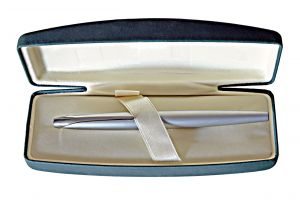
    Confidence in the competence of your claims handler is incentive in itself. Besides, who even needs a free fountain pen?
    With over 30 years in handling people’s claims for personal compensation, Wrigley Claydon is a name you can trust.
    If you are thinking about making a claim, call us on 0161 785 3534.
  • Employment Law: Redundancy – the days of ‘last in, first out’ are gone

    Employment Law: Redundancy – the days of ‘last in, first out’ are gone

    ‘Last in, first out’ (LIFO) used to be one of the most common ways of objectively determining who was going to lose their jobs in a redundancy situation.

    Put simply, LIFO means that when choosing people for redundancy, the longer you have been with a company the safer you are.

    Is this fair though?

    It may be objective, but when it comes to employment law redundancy LIFO isn’t necessarily fair when used as the sole selection criteria. Since the enactment of equality and anti-discrimination legislation, LIFO taken on its own is no longer considered as legally safe as it once was and is generally avoided by employers.

    For example, younger workers are more likely to lose out under a LIFO system, as they tend to be the people who have worked for the shortest time at an organisation. As they are at a disadvantage based on their age, they may have grounds to make a claim for indirect age discrimination. Instead employers should be looking at skills based selection, that doesn’t assume that just because you’ve been there a long time you’re better at the job.

    Employment Law Redundancy

    Redundancy is never easy for an employer. If you face the possibility of making them, take advice at the earliest opportunity to avoid the pitfalls.

    If you’re an employee, check at an early stage so that mistakes your employer might be making, can be rectified before the damage is done.

    For more information or to speak to our team about our Employment Law Redundancy services  please call us on  0161 624 6811

    Team: John Porter, Soibi Iketubosin