Category: News

  • Oldham family lawyers: the presumption of parental involvement

    Oldham family lawyers: the presumption of parental involvement

    Since April 2014 courts have been making child arrangement orders instead of residence and contacts orders. The new orders have two main elements to serve:

    1. with whom a child is to live and when
    2. with whom, when and how a child is to spend time or otherwise have contact with someone

    Whilst the new child arrangement orders appear to be very similar to residence and contact orders, it is hoped the new scheme will encourage parents to consider the needs of the children following a separation and will reach an amicable agreement instead of entering into a legal battle.

    From the courts perspective, under Section 11 of the Children and Families Act 2014 (which was rolled out on 22nd October 2014), they will now base decisions on child welfare on the presumption of continued parental involvement. This means family courts will consider involvement from both parents to be in the best interests of the child, where safe.  However, the welfare of a child will remain the number one priority.

    The new laws do not mean a shared residence arrangement will be granted or equal time with both parents. It is hoped the new scheme will ‘promote greater understanding about the way in which court decisions are made… and encourage separated parents to adopt less rigid and confrontational positions with regards to the arrangements for their children’.

    Justice Minister Simon Hughes said:

    We have made bold reforms so that the welfare of children is at the heart of the family justice system, and there can be no doubt that parents play a very important role in every child’s life. Following break up of relationships we are encouraging all parents to focus on the needs of the child rather than what they want for themselves.

    No parent should be excluded from their child’s life for no good reason. This change in the law is not about giving parents new ‘rights’ but makes clear to parents and everybody else that the family courts will presume that each parent will play a role in the future life of their child.

    Children and Families Minister, Edward Timpson:

    Having spent almost 10 years as a family barrister, I know nothing is more important than taking the time to listen to children and making sure their voices are heard loud and clear.

    This is a brand new system which puts the needs of children first, protects families from harmful and stressful battles in the courtroom and gives them greater support.

    This is further supported by the introduction of compulsory mediation under the Act. Both parties are expected to attend a Mediation Information and Assessment Meeting before making an application to the court.

    For help and advice on any matter relating to family law please contact our friendly, compassionate and experienced Oldham family lawyers. Call 0161 785 3521 or complete our online contact form.
  • Cyclist RTA case win for our Oldham personal injury solicitor

    Cyclist RTA case win for our Oldham personal injury solicitor

    Our client was a cyclist who unfortunately was struck by a lorry sustaining serious injuries to the foot, toes, ankle, ribs, upper arm and shoulder.

    We recovered £60,000 for our client.

    Road traffic accidents are the most common claims that our Oldham personal injury solicitors are asked to handle. With more and more drivers on the roads in Britain, more car crashes are to be expected.

    You can pursue a claim following a traffic accident, whether you are a driver or a passenger, as long as we are able to verify that the other driver caused the car crash because they were driving their vehicle negligently.

    Negligence can occur on the road in any number of ways, commonly, for example, if the other driver was driving too fast, if they changed lane recklessly or without indication or if they failed to stop at a give way junction.

    Liability is sometimes contested following a traffic accident; however the Highway Code together with previously decided court cases lays out guidelines to assist in determining liability before the law as well as the appropriate level of compensation owed for any damages or injury sustained.

    You can also claim if you were a pedestrian in the incident and have been injured because of the way in which the vehicle was drove. For example if they mounted the kerb and ran over your foot or if they did not stop while you were stepping out onto a zebra crossing.

    It’s not always strangers who cause the traffic accident. If you were a passenger in a vehicle that was driven by your friend, relative or colleague and they acted negligently causing you injury, you can still claim against them should you wish to. Their insurance company will settle your claim if appropriate.

    Even if the driver who caused the accident is not insured or they have disappeared from the scene of the accident, you can still claim.

    If you think you have grounds to claim after an accident, get in touch with us, your Oldham personal injury solicitor, on 0161 785 3534 and we can review the details of your case.

    Let us help you claim your accident compensation now.

    Personal Injury form
    reCAPTCHA
    Sending
  • Inheritance law changes

    Inheritance law changes

    New inheritance law changes simplifying what happens when someone dies without leaving a will came into effect on 1st October 2014.

    Changes to the rights of people whose spouses or civil partners die without making a will have come into force.

    The changes have been designed to speed up and modernise the process for dividing the money, property and other assets of someone who has died “intestate” (the legal terms for not having a will).

    The Ministry of Justice said the reforms bring the law into line with the expectations of modern society and will make the process easier to manage for relatives and friends.

    The changes, made in the new Inheritance and Trustees’ Powers Act, include:

    • When someone who has no children dies intestate, their whole estate will pass to their spouse. Before today’s changes a complex set of rules has been used which also, in some circumstances, allocated parts of the estate to other family members.
    • When someone dies intestate and they do have children, the way their estate is split between their spouse and children will be simplified. This has also previously been subject to a complex set of rules.
    • Closing a loophole to make sure children who are adopted don’t lose their inheritance after their parent’s death.

    Justice Minister Lord Faulks said:

    We want to make sure that when someone dies, and they haven’t left a will, their property will be dealt with sensibly and as quickly as possible. That is why we have made these common sense changes to modernise the law and make administering an estate faster and easier.

    A large number of people do die without leaving a will each year, and I would encourage people of all ages to ensure they have properly considered making a will so that, if the worst happens, their own wishes are followed.

    For married couples with no children, the surviving partner will now inherit their spouse’s entire estate.  Under former laws they would get £450,000, then half of anything above that, with the rest divided among other relatives.

    In cases where married couples had children, the surviving spouse was only entitled to interest on their half of anything over £250,000 under the old rules – with the sum itself given to the children after the surviving spouse died.  Under the new laws, the surviving spouse will get the first £250,000 as before but they will now get half of the remainder – rather than just interest on that amount.

    These are the first major changes to Rules of Intestacy since 1925. The changes apply in England and Wales.

    The changes are designed to make the system fairer and address concerns that is has been difficult for those who deserve an inheritance to get one.

    Rachel Damianou, Trust, Wills and Probate partner at Wrigley Claydon said:

    Whilst the changes undoubtedly help the families of those dying without a will it is still much safer to contact us and  make a will and ensure your precise wishes are carried out rather than relying on the laws of intestacy which effectively tells you who inherits and in what proportions on your death.

    To talk to us about making a Will please call us on 0161 624 6811.
  • Slip roads: a common road traffic accident spot

    Slip roads: a common road traffic accident spot

    In a recent case, our client was doing what thousands of us do every day – joining a dual carriage way from a slip road. Unfortunately on this day, an accident occurred that initially may have appeared to have been our client’s fault. However as we outline below, just because you are the one joining the road, it doesn’t mean you are automatically at fault if a road traffic accident occurs.

    An outline of this personal injury case

    As our client drove down the slip road, the lane they were merging into on the dual carriageway appeared to be clear although they could see some vehicle headlights in the distance.

    Our client’s car joined the main carriageway only to be struck violently by another vehicle. This collision caused extensive damage to both their vehicle as well as injuring our client.

    The defendants claimed that our client had joined the dual carriage way when it was unsafe to do so. However using various investigative procedures, we managed to persuade the defendants and the court that the other vehicle was travelling at excessive speed and was therefore responsible for the collision. In turn this meant that the claimant (our client) had joined the dual carriage way safely and wasn’t at fault.

    Because of this we were able to recover compensation both for the damage to our client’s vehicle and for our client’s personal injuries.

    What you should do

    If someone is trying to force the blame on you after a road traffic accident – don’t let them. Consult Wrigley Claydon and we will be able to help decide if you have grounds to claim after an accident. Call us on 0161 785 3534 and we can review the details of your case.

    Let us help you claim your personal injury compensation now.

  • Legal aid for musicians as Wrigley Claydon family law solicitor tours with opera

    Legal aid for musicians as Wrigley Claydon family law solicitor tours with opera

    Local solicitor Antony Brannick has been providing ‘legal aid’ of a rather different kind to a group of professional musicians recently.

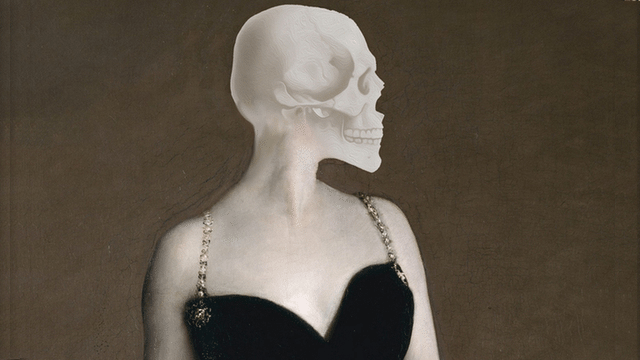
    Antony, who is a family law specialist with Wrigley Claydon solicitors and based at their Todmorden office, has been using his musical skills as a conductor in the world premiere of a new opera Madame X by established composer Tim Benjamin.

    Antony said, “I’ve always been interested in music throughout my legal career and last year the opportunity arose to conduct the first performances of Tim’s previous opera Emily”. The success of this opera, about the life and times of the militant suffragette Emily Wilding Davison, who was killed in a collision with the King’s horse at the Derby in 1913, has led to a further collaboration with Tim on the new opera which, like Emily, premiered at the Hippodrome Theatre in Todmorden.  However, Madame X has since been performed at the Square Chapel in Halifax and also the Arcola Theatre in London as part of the Grimeborn Festival, receiving extremely positive audience reaction. Critical reviews have also been encouraging, praising the work of the musicians.

    Antony has found taking the opera on tour both demanding and exciting, “I’ve felt privileged to work with a strong cast of excellent musicians and it’s been very interesting to reflect on the teamwork and preparation involved and a comparison with legal work in family proceedings. I have admired the skill and dedication of the singers just as in the same way I would hope to apply such principles to my own work in the office and at court. A lot of hard work goes in to the preparation for every performance and it’s interesting to get a somewhat different type of review!”

    Antony is part of a team of lawyers at Wrigley Claydon led by Jill Walker, head of department, together with Corinne Bailey, family executive. Between them they have a wealth of experience in all aspects of family law.

    There is one further chance to see Madame X which receives its final performance of this run at the Royal Northern College of Music, Oxford Road, Manchester on Thursday 25th September 2014. Tickets can be booked online through the RNCM or via the opera website www.madame-x.co.uk

  • Presumption of Death Certificate

    Presumption of Death Certificate

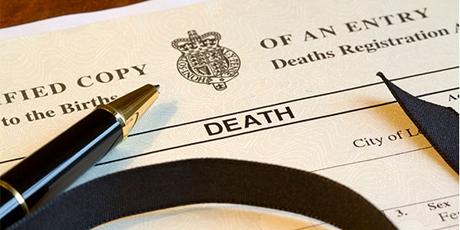
    Families of missing people will have new rights following law changes taking effect from, 1 October 2014.

    Families and next of kin will be able to apply for a Presumption of Death Certificate (made through the Presumption of Death Act 2013 and apply in England and Wales) for a loved one who has gone missing and is presumed dead.  Similar legislation is already in force in Scotland and Northern Ireland.

    The new declaration will work in the same way as a Death Certificate and will allow families of a missing person to handle their estate and financial affairs. The process has been complex in the past and grieving families have struggled to close bank accounts, stop direct debts and generally wind up affairs.

    The certificate will be issued by the court if the person has been missing for seven years or if there is good reason to believe he or she is dead.

    The declaration of presumed death will also mean that any marriage or civil partnership will come to an end in the same way as if the missing person had died. Property can also be inherited under the missing person’s will.

    Justice Minister Lord Faulks QC said:

    Today marks a crucial step forward for families facing up to the terrible situation of losing someone without a trace. We have made sure that while they are dealing with the heartache of a loved one going missing, they no longer have to face such a daunting task to deal with the practical issues that are also created.

    Rachel Damianou, Trust, Wills and Probate partner at Wrigley Claydon said:

    Dealing with a loved one’s estate is traumatic enough without this added stress. At Wrigley Claydon we try generally to make the whole process as smooth and painless as possible in all cases we deal with.

    The Ministry of Justice is currently consulting on whether a system should also be created under which a person can be appointed to deal with the property and affairs of a missing person who is not presumed dead; and, if so, how and on what terms.

    If you feel your loved one may qualify for a Presumption of Death Certificate, please contact our Trust, Wills and Probate team, Rachel Damianou or Jyoti Patel by calling 0161 624 6811.  We understand the delicate issues around this type of case and will do our very best to handle your enquiry with due care and respect.
  • Making a personal injury claim against a restaurant

    Making a personal injury claim against a restaurant

    In this case, our client was walking into a restaurant with a highly polished floor. Due to the rain outside, and customers bringing water in, the floor was wet, causing our client to slip and sustain several serious injuries.

    We successfully recovered £14,500 for our client.

    Wet or slippery surfaces can  be incredibly dangerous. In this case, our client sustained injuries to the head (which caused painful headaches for a long time after the incident), the neck, the wrist and hand, the buttocks and the ankle. Injuries such as these, while not causing any serious long-term damage, can take many weeks or months to heal. They can cause prolonged pain and affect mobility, making it difficult to complete simple tasks, or to work.

    Businesses are responsible for making sure these types of injuries do not happen. Establishments such as hotels and restaurants often have marble, tiled or wooden floors that are prone to becoming slippery, especially when customers are bringing water in on the soles of their shoes or food and drink is spilled. It is up to the business to ensure their premises are cleaned regularly in these circumstances, and that any hazardous surfaces are cleanly signposted to avoid accidents.

    If you slip or fall on a restaurant or hotel’s premises due to a slippery and un-signposted surface, then you are entitled to make an occupiers liability claim. However, this type of claim is not limited to accidents which occur in restaurants – whether your slip and fall occurred on the property of a business, a public place such as in a bus or train station, or on an individual property, you could be entitled to compensation.

    The first step in making a personal injury claim is to contact a personal injury solicitor. Whether your injury is extensive – as in this case – or smaller and less severe, if you have been hurt and it wasn’t your fault, you don’t need to stand for it. If you think that you may have grounds to make an occupier’s liability claim following an accident that could have been avoided, get in touch with Wrigley Claydon today.

    Call us on 0161 785 3534 or use our contact form and we will review your case.
  • Criminal Injuries Compensation Authority

    Criminal Injuries Compensation Authority

    The Criminal Injuries Compensation Authority (CICA) is a government organisation that can pay money (an award) to people who have been physically or mentally injured because they were the blameless victim of a violent crime.

    They consider applications and make awards that range from £1,000 to £500,000.

    The current Scheme was introduced on 27 November 2012 and applies to any application made on or after that date. If your application was made before then different rules may apply.

    How is Wrigley Claydon linked to the Criminal Injuries Compensation Authority?

    We can act for clients in CICA claims to present the claim in the best possible way to ensure maximum compensation for the injuries sustained. We also liaise with the CICA and take away from you the administrative burden. We can also gather further evidence and information that the CICA may require to substantiate your claim. We ensure that such information is obtained and submitted to the CICA within strict time limits. This allows (broadly) clients who suffer personal injury as a result of the criminal act of another to be compensated whether or not the criminal has any money (or insurance) to pay himself. Our payment amounts to a fee of up to 25% of any compensation you are awarded.  ou pay nothing if your claim does not succeed.  In this way we are sharing the risk with you and also have a vested interest in ensuring you recover maximum compensation.

    A report issued this week (4th September 2014) indicated that a number of police forces around the country are not investigating all crimes, principally due to a lack of resources. In a situation where crimes are not fully investigated, it may be harder for the individual to make a CICA claim without the assistance of a solicitor like Wrigley Claydon.

    Areas that constitute ‘criminal injury’ include physical assault, sexual abuse, racial abuse and post traumatic stress, amongst many more.

    If you feel you have a case for criminal injury compensation please contact one of our Litigation team, Vijay Srivastava or Shalish Mehta, by calling 0161 785 3529 or completing our claim form below.
    Personal Injury form
    reCAPTCHA
    Sending
  • Changes to consumer law: fixture or chattel?

    Changes to consumer law: fixture or chattel?

    If you’re planning on leaving your commercial property and want to remove certain items, what are your rights and where do you stand in terms of the law?

    The area of defining what is a ‘fixture’ and a ‘chattel’ can be difficult.  However, understanding the difference between them will help you determine what you can and cannot take with you at the end of your lease.

    In law, a fixture is generally defined as: an article attached to land and regarded as part of it OR a chattel that has been attached to property so that its removal would damage the property and may therefore be considered as part of the property.  The exception is a ‘trade fixture’, or item of machinery.  If the object can be removed without causing substantial damage to the premises it is the tenants to take.  If the structure of the property is compromised by its removal, it must stay in place.

    A chattel is an item of property other than freehold land, including tangible goods and leasehold interests.

    But which is which; fixture or chattel?

    The general rule is;  if it is a fixture, you can’t take it away, if it’s a chattel, it belongs to the tenant and can be removed.

    In a recent case, a court had to decide whether large items of plant machinery installed in a steel mill by a tenant were fixtures or chattels.  The High Court had held that all bar one of a hundred items were either chattels or tenant’s fixtures and could therefore be removed by the tenant.  The landlord appealed because the lease contained a clause, which in their view, overrode the removal.  The Court of Appeal agreed with the landlord.

    As well as knowing how to classify items, it’s also imperative that you check the wording of your lease to ensure nothing can override your right of removal.

    If you are still unclear and feel you need some expert advice about your commercial lease and the removal of items at the end of it, please contact one our Commercial Property solicitor John Porter. He’ll be happy to look over your existing lease or can assist in the writing of a new one.  Call 0161 785 3529, email info@wrigleyclaydon.com or fill in our web enquiry form.
  • Do I need a music license to play music at work legally?

    Do I need a music license to play music at work legally?

    When you play music at work you may not be aware that you need a licence for it. Many bars, restaurants and retail stores play recorded music whilst some offices and many factories and workshops allow the use of radios or background music for their staff to listen to while they are working. If you fall into one of these cases, you need to obtain (and pay for) a licence from the Performing Rights Society (PRS for Music) or Phonographic Performance Limited (PPL) for playing music in public.

    PRS and PPL are different licences. The first, allows you to play live music and collects and distributes money for the use of the musical composition and lyrics on behalf of authors, songwriters, composers and publishers. The second one, represents the copyright interests of record companies and performers and allows you to play recorded music or music videos in public, including radio and TV.

    The cost of the licence varies depending on many factors like business type, the size of the area in your business that the music can be heard in, how recorded music is used in your business (as background music, via a TV, telephone on-hold system, etc), and even the environment it is used in like in dance and exercise classes.

    If you don’t get a licence, you can be fined for copyright infringement and you may be liable to pay damages and costs. For this reason, it’s vital that you ensure your workplace is legally registered to play music whatever way you choose to listen to it.

    It’s not necessary to have a licence if you are a lone worker where music is not made available to any visitors or customers, or if you are listening to music on a personal portable device through earphones in your workplace.

    If you have any doubts about which licence is right for your business or organisation, and you want to obtain more information about PRS and PPL, you can call us at 0161 624 6811 and speak with our team of professionals or send us a message through our contact form.