Category: Business & Employment

  • The Platt Brothers

    The Platt Brothers

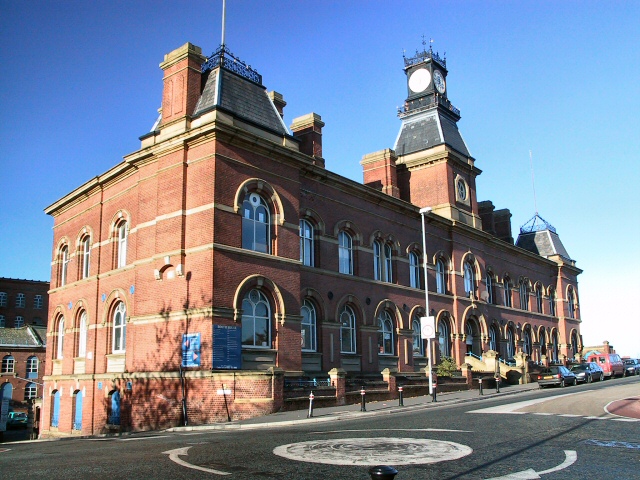
    The Platt Brothers were a textile machinery company founded in 1770 by Henry Platt.

    The company based in Werneth, Oldham became the largest textile machinery manufacturer in the world, and by the end of the 19th century, it was employing more than 12,000 workers.

    Henry Platt was a blacksmith who was manufacturing carding equipment in 1770. His grandson, also called Henry, founded a similar business in Uppermill.

    Platt Brothers Oldham.

    In 1920, Henry formed a partnership with Elijah Hibbert (Hibbert and Platt) and moved to Huddersfield Road. The company was later renamed to Hibbert Platt and Sons when his sons Joseph and John joined the company.

    When Henry Platt died in 1842 and Elijah Hibbert in 1854, all the shares went to the Platt family and the company became Platt Brothers & Company.

    They moved their headquarters from the ‘Old Works’ to the ‘New Works’ in 1868. In 1872 the company employed 7,000 men and had become the World’s Largest Textile Machinery Manufacturer. It was estimated by 1890 that the Works supported almost half of Oldham’s population.

    The company began producing munitions during World War I and resumed textile machinery manufacturing afterwards.

    In 1929 the Platt Brothers paid £100,000 for the patent rights for an innovative automatic weaving loom designed by Sakichi Toyoda. Toyoda was the founder of the Toyota company, and the money from the sale of the rights provided the start-up capital for the Toyota automobile endeavour. Toyota would later become, one of the world’s largest car manufacturers.

    After a slow decline in the cotton industry, the company closed its factory in 1982.

    Wrigley Claydon Solicitors were proud to act on behalf of the Platt Brothers for various forms over many years.

  • BT cuts 13,000 jobs to slash costs

    BT is to cut 13,000 jobs over three years, about 12% of its workforce. It said that the job cuts and other measures would help it to reduce costs by £1.5bn.

    It added that it would be hiring about 6,000 employees to “support network deployment and customer service”.

    A third of the job reductions will come from outside the UK in its Global Services division.

    It also said it intended to move out of its existing central London headquarters and into smaller premises.


    If you are considering a company merger, acquisition, takeover or joint venture or are in the midst of a shareholder dispute or share capital transaction or need business advice please contact us. Call 0161 624 6811 to speak to John Porter and Soibi Iketubosin in our Company/Commercial Department or email jap@wrigleyclaydon.com or si@wrigleyclaydon.com

  • London loses out as Unilever moves it’s headquarters

    Consumer goods giant Unilever, maker of Marmite, Pot Noodle and Ben & Jerry’s ice cream, has chosen Rotterdam over London for its headquarters.

    It would also be reorganising its business into three divisions: beauty and personal care, home care, and foods and refreshment.

    The first two divisions will have their headquarters in London, while the third will continue to be based in Rotterdam.

    The company employs 7,300 people in the UK and 3,100 in the Netherlands. No jobs will be lost by the move.

    Since 1930 Unilever has operated with two parent companies – a British PLC headquartered in London and a Dutch NV based in Rotterdam.

    Although run as one company, the distinct legal entities have different shareholders, separate stock listings and annual meetings and are subject to different laws and corporate governance requirements.

    If you are considering a company merger, acquisition, takeover or joint venture or are in the midst of a shareholder dispute or share capital transaction or need business advice please contact us.

    Call 0161 624 6811 to speak to John Porter and Soibi Iketubosin in our Company/Commercial Department or email jap@wrigleyclaydon.com or si@wrigleyclaydon.com


  • Dyson plans to offer a range of three electric cars

    Dyson is seeking an extra 300 engineers in a push to build its first electric car by 2020.

    Dyson already has a 400-strong team working on the project and has doubled the number of scientists working on its battery programmes over the past year.

    Dyson said the electric car team would shortly move to its new research and development base in Wiltshire. It is yet to decide where its electric cars will be manufactured.

    The UK is reported to be in contention for the work, along with Singapore, Malaysia and China.

    Japan, China, Taiwan and Korea had accounted for almost three quarters of 2017 sales.

    Billionaire founder James Dyson said people in Asia had “an extraordinary enthusiasm for technology that works”.


    If you are considering a company merger, acquisition, takeover or joint venture or are in the midst of a shareholder dispute or share capital transaction or need business advice please contact us. Call 0161 624 6811 to speak to John Porter and Soibi Iketubosin in our Company/Commercial Department or email jap@wrigleyclaydon.com or si@wrigleyclaydon.com


  • Lloyds Bank to support its small business customers

    Lloyds Bank has said it will provide £50m to support its small business customers who are struggling following the failure of outsourcing company Carillion and after the government refused to insure its debts.
    Meanwhile, Nationwide building society has said it will take in-house jobs which were performed by Carillion.
    Lloyds said its fund was for small businesses within Carillion’s supply chain that “may now be experiencing financial difficulty”.

    From 22 January 2018, 250 staff, mainly cleaners and maintenance workers, who were on the Carillion payroll, will be employed directly by Nationwide.

    It will also take over contracts arranged by Carillion, which provide employment for another 1,500 workers.
    Carillion went into liquidation earlier this week, threatening thousands of jobs, about 20,000 of them in the UK.

    If you are considering a company merger, acquisition, takeover or joint venture or are in the midst of a shareholder dispute or share capital transaction or need business advice please contact us. Call 0161 624 6811 to speak to John Porter and Soibi Iketubosin in our Company/Commercial Department or email jap@wrigleyclaydon.com or si@wrigleyclaydon.com
  • Toys R Us on brink of administration

    Toys R Us on brink of administration

    Toys R Us, which has 100 stores and outlets in the UK, has put forward a company voluntary arrangement (CVA), which is a step short of going into administration.

    Under its CVA plans, Toys R Us is proposing to close at least 26 loss-making UK stores, which would put up to 800 jobs at risk and mean rent cuts for landlords.

    The company says that their warehouse-style stores are now “too big and expensive to run”. It is also finding it hard to compete against online toy retailers.

    Administration solicitors

    If your company is facing administrations, or you are considering a company merger, acquisition, takeover or joint venture or are in the midst of a shareholder dispute or share capital transaction or need business advice please contact us and speak to our administration solicitors.

    Call 0161 624 6811 to speak to John Porter and Soibi Iketubosin in our Company/Commercial Department or email jap@wrigleyclaydon.com or si@wrigleyclaydon.com.
  • Debenhams shares fall 20%

    Department store chain Debenhams’ shares have fallen 20% after it warned that annual profits would be lower than expected.

    It said underlying pre-tax profits were now likely to be between £55m and £65m this year. Analysts had been expecting profits to be about £83m.

    Debenhams said like-for-like sales in the UK fell 2.6% in the 17 weeks to 30 December amid a “volatile and competitive” market.

    If you are considering a company merger, acquisition, takeover or joint venture or are in the midst of a shareholder dispute or share capital transaction or need business advice please contact us. Call 0161 624 6811 to speak to John Porter and Soibi Iketubosin in our Company/Commercial Department or email jap@wrigleyclaydon.com or si@wrigleyclaydon.com
  • Talk over sale of Newcastle Utd as owner Ashley meets investment firm

    Newcastle United Football Club owner Mike Ashley and British businesswoman Amanda Staveley have met for the first time in London to discuss the sale of the Premier League club. Investment firm PCP Capital Partners run by Staveley made a fresh offer of around £300m.

    Newcastle are yet to comment, but they have not denied the meeting took place.

    Ashley said in October he wanted to sell the club after 10 years in charge.

    Staveley helped broker the purchase of Manchester City by Sheikh Mansour in 2009 and it was reported she led Dubai International Capital’s £400m bid for Liverpool in 2008.

    Use a business acquisition solicitor

    If you are considering a company merger, acquisition, takeover or joint venture or are in the midst of a shareholder dispute or share capital transaction or need business advice please contact us.

    Call 0161 624 6811 to speak to John Porter and Soibi Iketubosin in our Company/Commercial Department or email jap@wrigleyclaydon.com or si@wrigleyclaydon.com.
  • GVC gambles on Ladbrokes Coral takeover

    Gambling organisation Ladbrokes Coral is in talks over a takeover by online rival GVC, who own the Bwin and Sportingbet brands in a deal that could value the group at up to £3.9bn.

    Under the proposals, GVC would hold 53.5% of the combined group.

    Ladbrokes Coral became the UK’s biggest high street bookmaker following last year’s merger of Ladbrokes and Coral.

    The maximum price GVC will pay will depend on the outcome of the government’s review of gaming machines. The Department of Culture, Media and Sport has said it will cap the size of stakes gamblers can make on fixed-odds betting terminals, due to concerns they may harm vulnerable people.

    GVC and Ladbrokes Coral said that the review could impact on the profitability of Ladbrokes Coral’s UK business.

    Ladbrokes Coral shares increased to 23% on news of the talks, while GVC’s were up by 4%.

    Business takeover solicitors

    If you are considering a company merger, acquisition, takeover or joint venture or are in the midst of a shareholder dispute or share capital transaction or need business advice please contact our business takeover solicitors.

    Call 0161 624 6811 to speak to John Porter and Soibi Iketubosin in our Company/Commercial Department or email jap@wrigleyclaydon.com or si@wrigleyclaydon.com.
  • Late Payment of Commercial Debts

    Late Payment of Commercial Debts

    What type of firms can I apply the late payment legislation to?

    The legal status of the business you are seeking to claim interest from is irrelevant. It can be a sole proprietor, partnership or limited liability company. However you cannot apply the late payment legislation to personal debt.

    What if a customer has more than one overdue invoice? How do I claim these multiple
    debts?

    If each invoice relates to a separate order for goods or services, then you are entitled to claim interest and compensation on each overdue invoice. The amount of compensation that the legislation states that you can claim for varies with the size of the claim.  Of course you have the option to add together several claims for compensation and late payment interest in one claim. If you do this, you should calculate each individually and set them out in writing so it is clear which claim relates to which order.

    Do I invoice for the interest and compensation?

    You should not issue an invoice for the interest and compensation – you put your claim in writing. Interest accumulates on a daily basis, so the longer the debt is unpaid, the more interest racks up. If your claim for interest remains unpaid, then you need to contact the customer again to chase, explaining that interest is continuing to accrue.

    Can I claim compensation for debt recovery costs and VAT, as well as late payment
    interest?

    The right to compensation for debt recovery costs was introduced for contracts dated on or after 7 August 2002. This can be claimed alongside the statutory late payment interest. Businesses are entitled to claim compensation when a debt remains unpaid after the date specified on the contract, or in the absence of a contract, 30 days after the delivery of the goods or service. The claim for compensation is made to the debtor, together with the claim for interest. Please note that businesses with their own contract terms for late payment interest forfeit their right to use the late payment legislation.

    In March 2013, the revised legislation entitles creditors to claim further recovery costs on top of the interest and compensation. For example, the cost of using a solicitor or debt recovery business can be added to the claim.

    How do I deal with collecting late payment interest when the invoice has been partially
    settled?

    In legal terms, interest continues at the ‘daily rate’ on the whole of the outstanding debt. Charging interest is designed to be a spur to payment. You should use the interest charge to encourage the debtor to pay on time i.e. explain to the debtor that they can avoid these extra costs if he/she pays according to terms.

    Do I have to notify a customer of my intention to charge late payment interest and debt
    recovery costs?

    It is not necessary for a customer to have been notified in advance of the intention to charge late payment interest and compensation and you do not have to refer to it in your contract.

    Should I sue for late payment interest?

    It is important to note that you do not need to go to court to claim late payment interest and debt recovery costs. You have a statutory right to both and these should be paid with the principal sum by the debtor.

    It may not be necessary at this stage to threaten your debtor with Court action, as that may be enough to prompt your debtor into responding to your calls and hopefully paying your invoice. It is advisable that you think carefully before deciding to pursue the debt through the court and that you speak with us.

    A customer is refusing to pay. What should I do?

    If a customer ‘refuses’ to pay you, it is important to establish why, rather than immediately seeking to sue the debtor. It could be that they are disputing the payment, in which case the onus is on you to resolve the dispute.

    You should write to whomever the commercial contract is with to acknowledge the outstanding payment.

    If the customer ignores your letter (which you should chase up with a phone call), has not disputed your invoice and has no justifiable reason for withholding payment, then you should speak to us about recovering the debt through the County Court.

    If a judgement is obtained, it may be necessary to take some enforcement action. Such action may include an application for an order to obtain information from a judgement debtor, a third party debt order, or instructing the Court Bailiff or the Sheriff.

    An order to obtain information from a judgement debtor brings the debtor before the Court to be examined under Oath, by the Court. A third party debt order is a way of obtaining money that is owed to you. If the debtor has money in a bank account, or a building society, the bank or building society can be ordered to pay the money over.

    Commercial debt

    Suffering a financial or contractual dispute can have serious implications on your business. Our business solicitors will quickly and efficiently put your case together and act on your behalf. We can advise you on the appropriate course of action and assist with any legal documents or proceedings that may occur.

    Call our commercial debt solicitor, Shalish Mehta, in our civil and commercial litigation department on 0161 624 6811 or email sm@wrigleyclaydon.com.