Author:

  • Winter safety tips from your Oldham personal injury solicitor

    Winter safety tips from your Oldham personal injury solicitor

    Slips, trips and falls are the most common types of accident in life generally and, thankfully, the consequences of many falls on snow or ice are simply minor bumps and bruises.

    In previous years however, thousands of people have been admitted to hospital after suffering more serious injuries after falls during wintry weather. Figures from the Hospital Episode Statistics for England show there were 4,314 admissions to hospital in 2011/12 as a result of people falling over on snow or ice.

    The consequences of a fall can be more serious for older people.

    Winter safety tips during times when pavements and footpaths are covered in snow and ice:
    • Wear sturdy footwear, with a good grip
    • If you’ve got Nordic walking poles (or similar), use them
    • Take it slowly
    • Allow yourself extra time to get from A to B, so you don’t find yourself having to make a last minute dash to get to the bus etc.
    • Keep an eye on what is underfoot. Some places will remain icy for longer than others (e.g. places that do not get the sun)
    • If you have neighbours who are elderly/disabled/new mums etc. offer to pop to the shops for them
    • If councils have provided grit bins so people can treat public areas not included on the usual gritter route, use them – but don’t remove vast quantities for your own personal use.
    • Remember – as well as slips and trips on pavements and in public places, many people fall over on their own footpaths and driveways. Take care in these places too.

    If you unfortunately do find yourself the victim of a slip or fall perhaps because a shopkeeper failed to keep his or her entryway free of ice during the winter then you are entitled to make a personal injury claim for compensation.

    Please contact Wrigley Claydon, your Oldham personal injury solicitor, to discuss how we can assist you. Call 0161 785 3534.
  • New rights for consumers against misleading and aggressive commercial practices

    New rights for consumers against misleading and aggressive commercial practices

    A new set of rights for victims of misleading and aggressive commercial practices came into force on 1st October 2014. Whilst it has been an offence for businesses to use these kinds of tactics since 2008, there has been no recompense for consumers who feel they have been victims.

    The Consumer Protection Regulations 2014 give consumers new rights to take civil actions to try and get compensation on goods or services received on or after 1st October.

    A misleading commercial practice is one which contains false information, or is likely to deceive the average consumer in its overall presentation. An example might be the promise of certain benefits from buying a particular product or service that are in fact false, download speeds of an Internet provider for example.

    An aggressive commercial practice is one which significantly impairs the consumer’s freedom of choice through the use of harassment, coercion or undue influence. A pushy door-to-door salesman who convinces a vulnerable person to sign up for a product or service they do not need by using unfair language and persuasive tactics is an example.

    According to the Department for Business Innovation & Skills the new rights will introduce:

    • a new 90 day period for victims to get out of a contract. Beyond this period consumers will still be able to get a discount on the price paid, as much as 100% depending on the actions of the trader. At present there is no right to a discount. Consumers can currently seek damages in the civil courts but it is extremely complex
    • a right to damages for any additional losses or stress suffered as a result of the actions of the trader
    • a brand new right to take personal action through the civil court for misleading or aggressive demands for payment, for example aggressive or misleading debt collection. At present there is no legislative right for consumers to do this

    Consumer Affairs Minister Jo Swinson said:

    The vast majority of businesses treat consumers fairly and provide a great service. However, a few bad apples have damaged the reputation of good business, broken the law and treated customers as a cash cow.

    This is why we are providing consumers with new powers to challenge rogue businesses and giving people the confidence to take action when they have been bullied or misled.

    If anyone thinks they’ve been bullied or misled into buying something the best thing to do is try and sort the issue out directly with the company and if that doesn’t work then contact Citizens Advice on 08444 111 444. They are an excellent source of advice and guidance.

    For more information or to speak to a civil litigation solicitor please call us on 0161 785 3534.
  • 80% don’t make personal injury claims

    80% don’t make personal injury claims

    One in four adults has suffered a recent personal injury or accident, but only 20 per cent have made a claim.

    Following an accident, you may want and be entitled to make a personal injury compensation claim through an personal injury claims solicitor.

    As many as one in four adults have suffered from a personal injury or accident within the last five years, yet only 20 per cent of those have actually gone on to make a claim.

    According to Personal Injury 2012 – a piece of research carried out by YouGov into the personal injury claims market – that’s leaving millions of pounds compensation un-claimed every year.

    The report shows that road traffic accidents (RTAs) make up the majority of personal injury claims (50 per cent), while accidents in a public place ‘shop premises, public highways etc’ (excluding RTAs) account for 21 per cent and accidents in the workplace account for 16 per cent.

    If you have been involved in an accident and it was your own fault, then there are no grounds to make a claim.

    However, if you were involved in an accident which was someone else’s fault then you could make an accident claim for compensation with an personal injury claims solicitor. The money received can help cover any expenses which have resulted from your accident.

    When you make a claim, it doesn’t necessarily need to be against another person, it could be a business or organisation such as a council or hospital.

    You have a good case if the other party was in some way negligent, and that was a factor leading to your accident.

    At Wrigley Claydon we work with people who have been involved in all kinds of accidents, but the most common are road traffic accidents, accidents at work, slips, trips and falls.

    We will work with you to get you the compensation you deserve. Talk to one of our personal injury claims solicitor on 0161 624 6811.
  • Negligence case win for Oldham personal injury lawyers

    Negligence case win for Oldham personal injury lawyers

    Our client slipped on cobbled stones. The cobbled stones had not been maintained properly by the local authority and consequently weeds and moss had grown and the cobbled stones had become dislodged. Our client suffered with ruptured tendons to both legs which led to restricted mobility and absence from work.

    As Oldham personal injury lawyers we recovered £21,500 for our client.

    If you’ve had a slip or a trip in a public place, your first feeling might be embarrassment which is completely natural. You might instinctively want to just forget about it, despite having suffered an injury.

    We understand that a fall in public isn’t the sort of thing most people want to dwell on but we recognise that in many cases the fall might not actually be your fault.

    We tend not to think of public roads and walkways as belonging to anyone and therefore it might seem like nobody is responsible for looking after you, but public roads and footpaths fall under the jurisdiction of local authorities who have a duty of care to provide for members of the public.

    It might be worth having a close look at what caused your fall as you might have grounds to claim compensation.

    Councils have an obligation to try and ensure our safety. Accidents can often happen when there are uneven paving stones, unmarked holes on the roads or if a railing is unstable or missing alongside a difficult walkway.

    It’s the council’s responsibility to take adequate safety measures to prevent accidents, which includes regular checks for any potential hazards. When you tripped were there signs in place to give you significant warning of a threat?

    Common footpath injuries usually occur in the shins and knees or in the wrists and elbows if you’ve tried to break your fall. Following a slip or a trip it’s worth consulting your general practitioner or any other healthcare professional, for instance in a nearby accident and emergency ward, to inspect whether you’ve incurred an injury.

    If you have had an accident and it seems that more could have been done to prevent it, then you might have grounds for a claim. Talk to us, we are experienced personal injury lawyers.

    Give us a call on 0161 785 3534 for advice about claiming for a trip in public and we can guide you through the process.
  • Oldham family lawyers: the presumption of parental involvement

    Oldham family lawyers: the presumption of parental involvement

    Since April 2014 courts have been making child arrangement orders instead of residence and contacts orders. The new orders have two main elements to serve:

    1. with whom a child is to live and when
    2. with whom, when and how a child is to spend time or otherwise have contact with someone

    Whilst the new child arrangement orders appear to be very similar to residence and contact orders, it is hoped the new scheme will encourage parents to consider the needs of the children following a separation and will reach an amicable agreement instead of entering into a legal battle.

    From the courts perspective, under Section 11 of the Children and Families Act 2014 (which was rolled out on 22nd October 2014), they will now base decisions on child welfare on the presumption of continued parental involvement. This means family courts will consider involvement from both parents to be in the best interests of the child, where safe.  However, the welfare of a child will remain the number one priority.

    The new laws do not mean a shared residence arrangement will be granted or equal time with both parents. It is hoped the new scheme will ‘promote greater understanding about the way in which court decisions are made… and encourage separated parents to adopt less rigid and confrontational positions with regards to the arrangements for their children’.

    Justice Minister Simon Hughes said:

    We have made bold reforms so that the welfare of children is at the heart of the family justice system, and there can be no doubt that parents play a very important role in every child’s life. Following break up of relationships we are encouraging all parents to focus on the needs of the child rather than what they want for themselves.

    No parent should be excluded from their child’s life for no good reason. This change in the law is not about giving parents new ‘rights’ but makes clear to parents and everybody else that the family courts will presume that each parent will play a role in the future life of their child.

    Children and Families Minister, Edward Timpson:

    Having spent almost 10 years as a family barrister, I know nothing is more important than taking the time to listen to children and making sure their voices are heard loud and clear.

    This is a brand new system which puts the needs of children first, protects families from harmful and stressful battles in the courtroom and gives them greater support.

    This is further supported by the introduction of compulsory mediation under the Act. Both parties are expected to attend a Mediation Information and Assessment Meeting before making an application to the court.

    For help and advice on any matter relating to family law please contact our friendly, compassionate and experienced Oldham family lawyers. Call 0161 785 3521 or complete our online contact form.
  • Cyclist RTA case win for our Oldham personal injury solicitor

    Cyclist RTA case win for our Oldham personal injury solicitor

    Our client was a cyclist who unfortunately was struck by a lorry sustaining serious injuries to the foot, toes, ankle, ribs, upper arm and shoulder.

    We recovered £60,000 for our client.

    Road traffic accidents are the most common claims that our Oldham personal injury solicitors are asked to handle. With more and more drivers on the roads in Britain, more car crashes are to be expected.

    You can pursue a claim following a traffic accident, whether you are a driver or a passenger, as long as we are able to verify that the other driver caused the car crash because they were driving their vehicle negligently.

    Negligence can occur on the road in any number of ways, commonly, for example, if the other driver was driving too fast, if they changed lane recklessly or without indication or if they failed to stop at a give way junction.

    Liability is sometimes contested following a traffic accident; however the Highway Code together with previously decided court cases lays out guidelines to assist in determining liability before the law as well as the appropriate level of compensation owed for any damages or injury sustained.

    You can also claim if you were a pedestrian in the incident and have been injured because of the way in which the vehicle was drove. For example if they mounted the kerb and ran over your foot or if they did not stop while you were stepping out onto a zebra crossing.

    It’s not always strangers who cause the traffic accident. If you were a passenger in a vehicle that was driven by your friend, relative or colleague and they acted negligently causing you injury, you can still claim against them should you wish to. Their insurance company will settle your claim if appropriate.

    Even if the driver who caused the accident is not insured or they have disappeared from the scene of the accident, you can still claim.

    If you think you have grounds to claim after an accident, get in touch with us, your Oldham personal injury solicitor, on 0161 785 3534 and we can review the details of your case.

    Let us help you claim your accident compensation now.

    Personal Injury form
    reCAPTCHA
    Sending
  • Inheritance law changes

    Inheritance law changes

    New inheritance law changes simplifying what happens when someone dies without leaving a will came into effect on 1st October 2014.

    Changes to the rights of people whose spouses or civil partners die without making a will have come into force.

    The changes have been designed to speed up and modernise the process for dividing the money, property and other assets of someone who has died “intestate” (the legal terms for not having a will).

    The Ministry of Justice said the reforms bring the law into line with the expectations of modern society and will make the process easier to manage for relatives and friends.

    The changes, made in the new Inheritance and Trustees’ Powers Act, include:

    • When someone who has no children dies intestate, their whole estate will pass to their spouse. Before today’s changes a complex set of rules has been used which also, in some circumstances, allocated parts of the estate to other family members.
    • When someone dies intestate and they do have children, the way their estate is split between their spouse and children will be simplified. This has also previously been subject to a complex set of rules.
    • Closing a loophole to make sure children who are adopted don’t lose their inheritance after their parent’s death.

    Justice Minister Lord Faulks said:

    We want to make sure that when someone dies, and they haven’t left a will, their property will be dealt with sensibly and as quickly as possible. That is why we have made these common sense changes to modernise the law and make administering an estate faster and easier.

    A large number of people do die without leaving a will each year, and I would encourage people of all ages to ensure they have properly considered making a will so that, if the worst happens, their own wishes are followed.

    For married couples with no children, the surviving partner will now inherit their spouse’s entire estate.  Under former laws they would get £450,000, then half of anything above that, with the rest divided among other relatives.

    In cases where married couples had children, the surviving spouse was only entitled to interest on their half of anything over £250,000 under the old rules – with the sum itself given to the children after the surviving spouse died.  Under the new laws, the surviving spouse will get the first £250,000 as before but they will now get half of the remainder – rather than just interest on that amount.

    These are the first major changes to Rules of Intestacy since 1925. The changes apply in England and Wales.

    The changes are designed to make the system fairer and address concerns that is has been difficult for those who deserve an inheritance to get one.

    Rachel Damianou, Trust, Wills and Probate partner at Wrigley Claydon said:

    Whilst the changes undoubtedly help the families of those dying without a will it is still much safer to contact us and  make a will and ensure your precise wishes are carried out rather than relying on the laws of intestacy which effectively tells you who inherits and in what proportions on your death.

    To talk to us about making a Will please call us on 0161 624 6811.
  • Slip roads: a common road traffic accident spot

    Slip roads: a common road traffic accident spot

    In a recent case, our client was doing what thousands of us do every day – joining a dual carriage way from a slip road. Unfortunately on this day, an accident occurred that initially may have appeared to have been our client’s fault. However as we outline below, just because you are the one joining the road, it doesn’t mean you are automatically at fault if a road traffic accident occurs.

    An outline of this personal injury case

    As our client drove down the slip road, the lane they were merging into on the dual carriageway appeared to be clear although they could see some vehicle headlights in the distance.

    Our client’s car joined the main carriageway only to be struck violently by another vehicle. This collision caused extensive damage to both their vehicle as well as injuring our client.

    The defendants claimed that our client had joined the dual carriage way when it was unsafe to do so. However using various investigative procedures, we managed to persuade the defendants and the court that the other vehicle was travelling at excessive speed and was therefore responsible for the collision. In turn this meant that the claimant (our client) had joined the dual carriage way safely and wasn’t at fault.

    Because of this we were able to recover compensation both for the damage to our client’s vehicle and for our client’s personal injuries.

    What you should do

    If someone is trying to force the blame on you after a road traffic accident – don’t let them. Consult Wrigley Claydon and we will be able to help decide if you have grounds to claim after an accident. Call us on 0161 785 3534 and we can review the details of your case.

    Let us help you claim your personal injury compensation now.

  • Legal aid for musicians as Wrigley Claydon family law solicitor tours with opera

    Legal aid for musicians as Wrigley Claydon family law solicitor tours with opera

    Local solicitor Antony Brannick has been providing ‘legal aid’ of a rather different kind to a group of professional musicians recently.

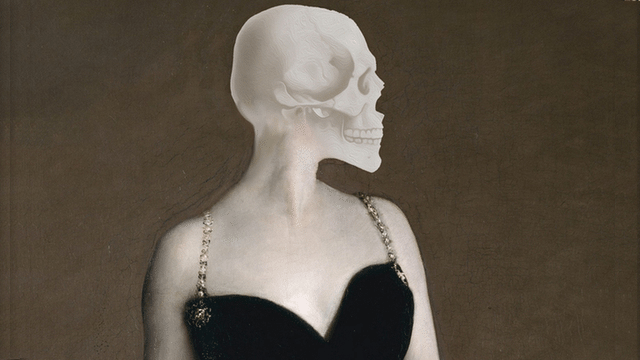
    Antony, who is a family law specialist with Wrigley Claydon solicitors and based at their Todmorden office, has been using his musical skills as a conductor in the world premiere of a new opera Madame X by established composer Tim Benjamin.

    Antony said, “I’ve always been interested in music throughout my legal career and last year the opportunity arose to conduct the first performances of Tim’s previous opera Emily”. The success of this opera, about the life and times of the militant suffragette Emily Wilding Davison, who was killed in a collision with the King’s horse at the Derby in 1913, has led to a further collaboration with Tim on the new opera which, like Emily, premiered at the Hippodrome Theatre in Todmorden.  However, Madame X has since been performed at the Square Chapel in Halifax and also the Arcola Theatre in London as part of the Grimeborn Festival, receiving extremely positive audience reaction. Critical reviews have also been encouraging, praising the work of the musicians.

    Antony has found taking the opera on tour both demanding and exciting, “I’ve felt privileged to work with a strong cast of excellent musicians and it’s been very interesting to reflect on the teamwork and preparation involved and a comparison with legal work in family proceedings. I have admired the skill and dedication of the singers just as in the same way I would hope to apply such principles to my own work in the office and at court. A lot of hard work goes in to the preparation for every performance and it’s interesting to get a somewhat different type of review!”

    Antony is part of a team of lawyers at Wrigley Claydon led by Jill Walker, head of department, together with Corinne Bailey, family executive. Between them they have a wealth of experience in all aspects of family law.

    There is one further chance to see Madame X which receives its final performance of this run at the Royal Northern College of Music, Oxford Road, Manchester on Thursday 25th September 2014. Tickets can be booked online through the RNCM or via the opera website www.madame-x.co.uk

  • Presumption of Death Certificate

    Presumption of Death Certificate

    Families of missing people will have new rights following law changes taking effect from, 1 October 2014.

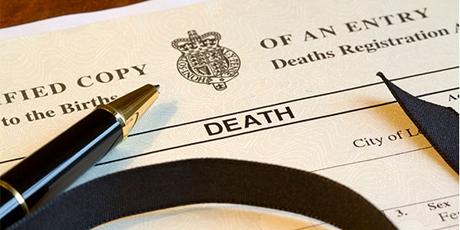
    Families and next of kin will be able to apply for a Presumption of Death Certificate (made through the Presumption of Death Act 2013 and apply in England and Wales) for a loved one who has gone missing and is presumed dead.  Similar legislation is already in force in Scotland and Northern Ireland.

    The new declaration will work in the same way as a Death Certificate and will allow families of a missing person to handle their estate and financial affairs. The process has been complex in the past and grieving families have struggled to close bank accounts, stop direct debts and generally wind up affairs.

    The certificate will be issued by the court if the person has been missing for seven years or if there is good reason to believe he or she is dead.

    The declaration of presumed death will also mean that any marriage or civil partnership will come to an end in the same way as if the missing person had died. Property can also be inherited under the missing person’s will.

    Justice Minister Lord Faulks QC said:

    Today marks a crucial step forward for families facing up to the terrible situation of losing someone without a trace. We have made sure that while they are dealing with the heartache of a loved one going missing, they no longer have to face such a daunting task to deal with the practical issues that are also created.

    Rachel Damianou, Trust, Wills and Probate partner at Wrigley Claydon said:

    Dealing with a loved one’s estate is traumatic enough without this added stress. At Wrigley Claydon we try generally to make the whole process as smooth and painless as possible in all cases we deal with.

    The Ministry of Justice is currently consulting on whether a system should also be created under which a person can be appointed to deal with the property and affairs of a missing person who is not presumed dead; and, if so, how and on what terms.

    If you feel your loved one may qualify for a Presumption of Death Certificate, please contact our Trust, Wills and Probate team, Rachel Damianou or Jyoti Patel by calling 0161 624 6811.  We understand the delicate issues around this type of case and will do our very best to handle your enquiry with due care and respect.